



Introduction
AI search is changing brand discovery from a list of links into a synthesized decision. A buyer can now ask a conversational system to compare products, explain trade-offs, recommend vendors for a specific use case, or shortlist solutions under a budget. The answer may combine knowledge from websites, product feeds, reviews, forums, publications, databases, and the model’s learned representations. In that experience, visibility is no longer limited to whether a brand owns a high-ranking page. A brand can be mentioned without receiving a link, cited but not recommended, recommended but ranked below a competitor, or omitted even when its pages perform well in conventional search.
This shift creates a measurement gap. Organic rankings, impressions, clicks, and backlinks remain useful, but they cannot fully answer the questions that matter inside a generated response: Did the model recognize the brand as relevant to the category? Was it included in the consideration set? Which sources supported the answer? What claim was attributed to the brand? Did the recommendation appear for informational prompts, comparison prompts, or high-intent buying prompts? Did the answer lead to a qualified visit, inquiry, or order? Traditional analytics usually begins after a click; AI influence often begins before a click and may not produce one at all.
GEO addresses this gap by treating AI visibility as a new layer of demand capture. It starts with the real prompts buyers use, measures how models respond, identifies the evidence patterns behind cited and recommended brands, improves the brand’s entity and content footprint, and connects exposure to commercial outcomes. The work complements SEO rather than replacing it. Search-accessible pages, strong technical foundations, and reputable links still matter because AI systems frequently retrieve from the open web. GEO extends that foundation to the answer layer, where brands must be understood and selected—not merely indexed.
What GEO Means: An Entity and Evidence Discipline
The word “generative” matters because the output is assembled, not simply retrieved. An AI system may search for fresh information, draw on indexed documents, reconcile multiple sources, and generate a response tailored to the user’s constraints. Consequently, GEO operates across two connected layers. The first is retrievability: whether relevant sources can be discovered, parsed, and selected. The second is synthesis: whether the available evidence gives the system enough confidence to describe, compare, cite, or recommend the brand in the final answer.
At the center of GEO is the entity. An entity is a distinct, identifiable thing—such as a company, product, person, category, certification, or location—with attributes and relationships. A brand becomes easier for AI systems to understand when its name, offering, audience, claims, proof, and relationships are expressed consistently across first-party and third-party sources. Inconsistent names, ambiguous product positioning, conflicting specifications, thin author information, or unsupported superlatives weaken that representation. Clear entity signals reduce uncertainty: the brand is associated with a defined category; the product has explicit use cases and constraints; claims are backed by accessible evidence; and trusted sources corroborate the same facts.
GEO is therefore not a single content format or technical trick. It is an operating discipline that coordinates product data, corporate facts, structured markup, editorial content, research assets, earned media, community discussion, reviews, and analytics. The best output is not “AI-written content.” It is an evidence environment in which high-quality answers can be formed. That distinction protects the work from becoming keyword stuffing in a new costume. Repeating a phrase may increase textual frequency, but it does not establish authority, resolve ambiguity, prove a claim, or demonstrate fit for a buyer’s situation.
For marketing and growth teams, the practical goal is to move the brand through four states: recognized, retrieved, trusted, and selected. Recognition means the system understands the entity. Retrieval means relevant evidence appears for the prompt. Trust means the evidence is consistent and credible enough to use. Selection means the brand earns a mention, citation, or recommendation in the generated response. Each state can fail for a different reason, so each requires a different diagnostic and a different intervention.
How AI Search Produces Brand Answers
No single public formula determines which brands appear in every AI answer. Models and answer engines differ in their training, retrieval systems, browsing behavior, source policies, freshness, personalization, and response design. Still, a useful business model can describe the common decision chain. A user prompt establishes an intent and a set of constraints. The system interprets the entities and task, may retrieve candidate documents or data, evaluates evidence, constructs an answer, and presents claims with or without visible citations. The final wording is probabilistic, which is why a single test is never a reliable visibility measurement.
Prompt interpretation and candidate formation
A prompt such as “best project management software for a 30-person agency with client approvals” contains category, company-size, workflow, and evaluation signals. The system must determine which criteria matter and which brands could satisfy them. Brands with clear positioning and evidence for those exact constraints are easier to include than brands described only with generic language. This is why prompt intelligence is more useful than a flat keyword list: it captures the decision context surrounding a query.
Retrieval, source selection, and synthesis
When current or specific information is needed, the system may retrieve webpages, feeds, documents, or other indexed materials. Source selection is influenced by relevance, accessibility, specificity, authority, freshness, and corroboration, although the weighting is neither uniform nor fully disclosed. A technically accessible page can still be ignored if it adds little unique evidence. Conversely, a detailed comparison, original dataset, transparent methodology, or authoritative product specification can become useful because it helps answer a narrow question precisely.
Recommendation is contextual, not universal
A brand may be strong for one prompt cluster and absent from another. A premium product could be recommended for performance-focused questions but excluded from budget prompts. A B2B provider may appear in category explanations but not procurement comparisons because implementation details, pricing logic, case evidence, or security information are unclear. GEO measurement therefore evaluates repeated prompt sets across models, locations, languages, and time. The unit of analysis is not merely a keyword or page; it is the relationship between a prompt, an answer, a brand, a source, and an outcome.
GEO vs. SEO: Different Optimization Targets
GEO and SEO share important foundations. Both benefit from crawlable websites, clear information architecture, useful content, authoritative references, accurate structured data, and strong brand reputation. Both are harmed by duplicate pages, inaccessible assets, vague claims, and inconsistent entity information. The difference is the primary surface being optimized and the metrics used to evaluate success. SEO traditionally optimizes the visibility and performance of webpages in search results. GEO optimizes how a brand and its evidence are represented inside generated answers.
This changes the unit of competition. In SEO, teams commonly compare URLs for a query and observe ranking positions. In GEO, teams compare brand inclusion, answer share, recommendation order, claim accuracy, citation sources, and prompt coverage. A page can rank well yet fail to shape an answer if the content is too generic, the entity is unclear, or other sources provide stronger evidence. The reverse can also occur: a brand may be mentioned because external sources describe it, even when its own website attracts little traffic. That visibility is valuable, but it can also be risky if the description is outdated or inaccurate.
| Dimension | Traditional SEO | GEO |
|---|---|---|
| Primary surface | Search results and webpage rankings | AI-generated answers, citations, and recommendations |
| Unit of analysis | Query-to-URL performance | Prompt-to-answer-to-brand performance |
| Core visibility | Rank, impression, click-through rate | Mention rate, share of AI voice, recommendation rank |
| Authority evidence | Links, relevance, site quality | Retrievable evidence, corroboration, entity consistency, source authority |
| Conversion view | Organic sessions and conversions | AI exposure, referral behavior, assisted conversions, AI-attributed revenue |
| Optimization cadence | Page and query monitoring | Repeated prompt testing across models, markets, and answer types |
The most productive strategy is not to choose between GEO and SEO. It is to use SEO to create a discoverable, technically reliable knowledge base and GEO to ensure that the brand is understood and competitive within synthesized answers. Shared work—such as resolving duplicate entity information, strengthening product pages, publishing original research, and earning credible references—can improve both surfaces. GEO adds a distinct prompt-measurement layer and a commercial attribution layer that conventional rank tracking does not provide.
The GEO Optimization Framework
A mature GEO program follows a closed loop rather than a one-time content campaign. It begins by measuring the brand’s current answer-layer performance, identifies the prompts and evidence gaps that matter, strengthens first-party and third-party signals, and then connects AI exposure to business results. The sequence below prevents teams from publishing at random. Each step produces an observable output and informs the next cycle.
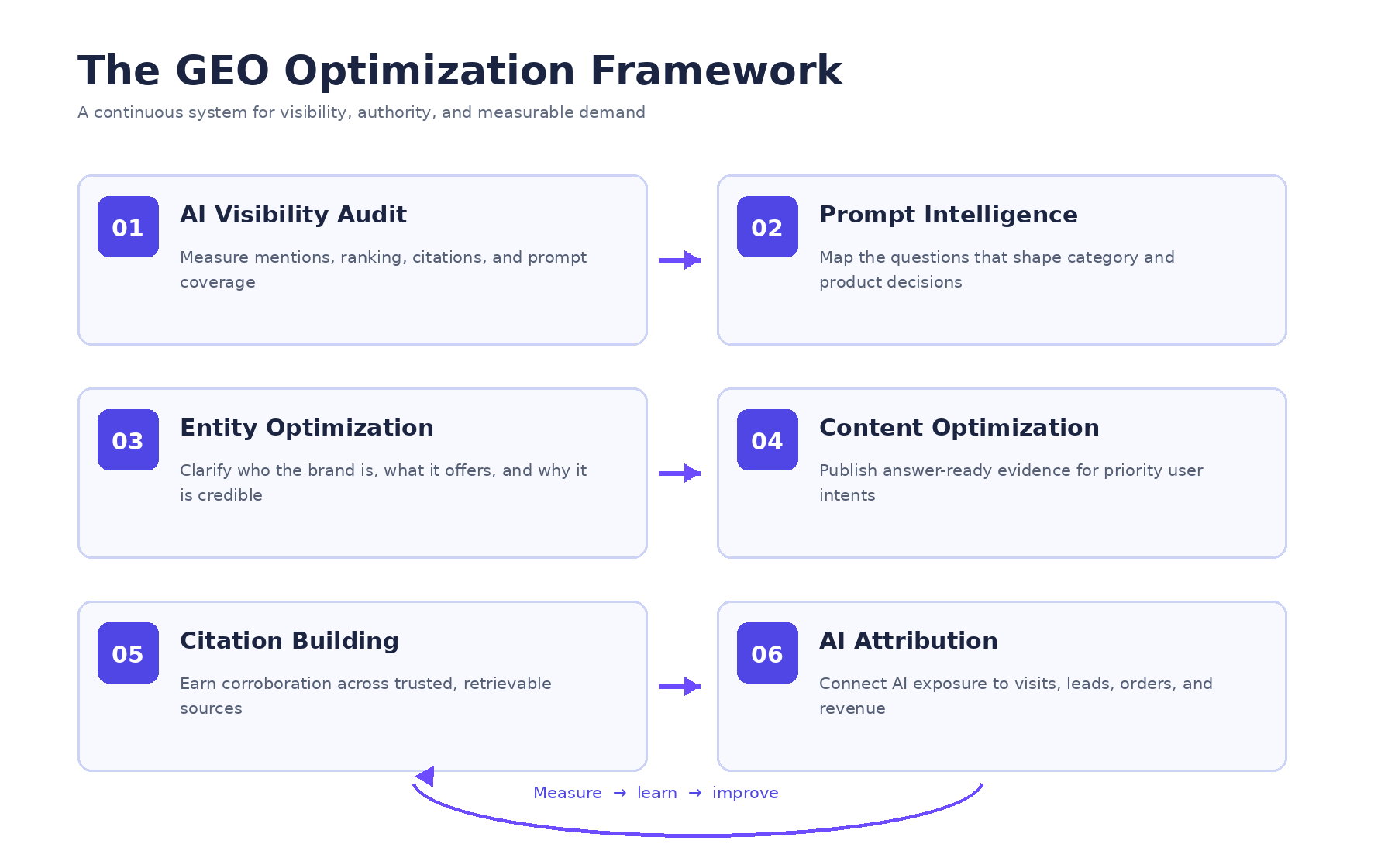
Figure 1: The GEO Optimization Framework
1. AI visibility audit
Establish a baseline across a representative, versioned prompt set. Record whether the brand is mentioned, where it ranks in recommendations, which competitors appear, what claims are made, and which sources are cited. Segment prompts by awareness, category education, comparison, use case, and purchase intent. Test multiple models and repeat measurements because answers vary. The audit should expose blind spots, not produce a vanity score.
2. Prompt intelligence
Map the questions that influence real decisions. Combine customer interviews, sales objections, search demand, product requirements, competitor comparisons, support tickets, and market language. Cluster prompts by intent and constraint, then prioritize them by commercial relevance, current visibility, competitor occupancy, and the team’s ability to provide credible evidence.
3. Entity optimization
Clarify the brand’s identity and relationships across the website and external footprint. Align company name, product names, category definitions, locations, founders, credentials, policies, specifications, and proof. Use structured data where it truthfully describes page content, but do not treat markup as a substitute for substantive information. The objective is a consistent, verifiable entity graph.
4. Content optimization
Create answer-ready resources for priority prompts: product comparisons, methodology pages, original research, technical explainers, case evidence, FAQs, implementation guides, and clearly scoped product pages. Lead with direct definitions and claims, then support them with context, limitations, evidence, and update dates. Useful content reduces the work an answer engine must do to extract a reliable fact.
5. Citation building
Develop independent corroboration through reputable publications, industry databases, partners, experts, customers, communities, and research distribution. The objective is not bulk link placement. It is to make important claims visible across sources that are relevant, trustworthy, accessible, and likely to be retrieved for the target prompt. Citation diversity can also reduce dependence on any single platform.
6. AI attribution
Measure what happens after and around AI exposure. Capture AI referral sessions where available, preserve campaign and landing-page context, track meaningful events, and compare changes against the prompt baseline. For B2B, include qualified inquiries, pipeline, and assisted revenue; for commerce, include product views, add-to-cart events, orders, and revenue. Attribution should acknowledge uncertainty rather than claiming that every mention caused a sale.
What Brands Should Measure
GEO measurement must separate visibility, quality, evidence, and business impact. A single score hides the reason performance changed. For example, mention rate can rise while recommendation rank falls; citations can increase while the cited claims remain inaccurate; AI referral traffic can grow while conversions decline. A balanced measurement system gives marketing, content, communications, product, and analytics teams a shared view of the answer journey.
| Metric | What it measures | Example calculation | Management use |
|---|---|---|---|
| Brand mention rate | Presence across tested answers | Answers mentioning brand ÷ eligible answers | Detect inclusion and coverage gaps |
| Share of AI voice | Brand presence relative to competitors | Brand mentions ÷ all tracked brand mentions | Assess competitive attention |
| Recommendation rank | Order within ranked or sequenced suggestions | Average observed position | Evaluate prominence, not just presence |
| Citation probability | Likelihood that the brand or its sources are cited | Cited answers ÷ eligible answers | Test evidence usefulness |
| Claim accuracy | Correctness and freshness of brand statements | Accurate claims ÷ audited claims | Manage reputation risk |
| Prompt coverage | Visibility across priority intent clusters | Visible prompts ÷ tracked prompts by cluster | Prioritize content and entity work |
| AI-driven outcomes | Visits, leads, orders, or assisted revenue | Tracked outcomes associated with AI touchpoints | Connect visibility to growth |
Measurement design matters as much as metric selection. Prompts should be versioned so changes in wording do not masquerade as performance changes. Tests should specify model, mode, market, language, date, and whether live retrieval was available. Teams should retain answer evidence and citation sources so results can be audited. A prompt sample must also reflect actual customer decisions; hundreds of loosely related questions can dilute the signal more than they improve it.
Commercial attribution requires a second layer. Direct AI referrals can be tagged or identified in analytics, but not every influence creates a clickable source. Buyers may discover a brand in an answer, search for it later, visit directly, or involve another stakeholder. A practical model combines direct referrals, self-reported discovery, branded-demand changes, controlled landing pages, CRM source data, and time-based comparisons. The output should be described as direct, assisted, or inferred—not collapsed into one overconfident revenue number.
| GeoEye measurement principle: Track the full chain from prompt exposure to evidence and outcome: answer → mention → rank → citation → visit → conversion. |
|---|
A Realistic Business Example
Consider a fictional B2B software company, NorthstarOps, that sells inventory planning tools to mid-market retailers. Its website ranks for several branded terms and receives steady organic traffic, yet the brand rarely appears when buyers ask AI systems for “inventory forecasting software for multi-location retailers” or “alternatives to enterprise demand planning tools for a 50-store chain.” Competitors dominate these answers, often supported by review sites, implementation guides, and detailed integration pages.
A GEO audit reveals three different problems. First, NorthstarOps is recognized as inventory software but not consistently associated with multi-location retail. Second, its product page claims “fast implementation” without explaining the implementation process, expected timeline, data requirements, or customer evidence. Third, external descriptions use inconsistent category labels. The response is not to publish dozens of generic articles. The team clarifies its category and use cases across core pages, adds precise integration and implementation documentation, publishes a benchmark based on anonymized customer data, and distributes the methodology to relevant analysts and retail operations communities.
The prompt set is then retested monthly. Mention rate increases first for informational questions because the benchmark provides useful category evidence. Citation probability rises when systems retrieve the methodology page. Recommendation visibility improves later for use-case prompts after third-party sources corroborate the multi-location positioning. At the same time, the team tracks AI referral visits to the benchmark and product pages, demo requests, and CRM-qualified opportunities. Not every new mention is credited as revenue; direct referrals are reported separately from assisted influence.
This example illustrates why GEO is cross-functional. Content created the evidence, product marketing clarified positioning, engineering improved technical accessibility, communications supported third-party distribution, sales contributed real buyer questions, and analytics measured outcomes. The gain came from aligning entity, evidence, retrieval, and measurement around a defined set of decisions. The same logic applies to consumer brands, although the high-intent evidence may include product availability, reviews, specifications, comparison criteria, pricing, and purchase pathways rather than demos and pipeline.
Common GEO Mistakes
The fastest way to waste a GEO budget is to treat the discipline as mass content production. More pages can expand coverage, but volume does not compensate for weak evidence, unclear positioning, inaccessible content, or irrelevant prompt targeting. AI systems do not owe visibility to a brand because it publishes frequently. Each asset should have a defined job: clarify an entity, answer an important question, supply a verifiable fact, demonstrate a comparison, or provide original evidence.
Optimizing for one answer or one model
A single favorable screenshot is not a strategy. Generated answers vary by time, model, retrieval mode, language, location, and phrasing. Testing only branded prompts also produces a misleading result because existing awareness is not the same as category discovery. Use a stable prompt portfolio, test meaningful variants, and focus on patterns rather than isolated wins.
Confusing schema with authority
Structured data can make explicit information easier for machines to parse, but it does not prove that a claim is true or important. Adding Organization, Product, FAQ, or Article markup to thin content does not create trust. Markup should accurately reflect visible content and support a broader evidence system that includes clear authorship, methodology, product facts, policies, and corroboration.
Building citations without source quality
Bulk syndication, low-quality directories, and repetitive guest posts may create links but little usable evidence. Citation building should begin with the information gap inside target prompts. Ask which independent source could credibly verify the claim, which format would be retrievable, and what unique evidence the brand can contribute. Relevance and corroboration matter more than raw placement counts.
Reporting visibility without business context
A higher mention rate can be strategically valuable, but leadership needs to know where it improved and whether the change influenced demand. Break results down by prompt intent, product, market, model, and competitor. Pair visibility metrics with direct and assisted outcomes. Where attribution is uncertain, say so. Credible GEO reporting distinguishes observation from inference.
Frequently Asked Questions
What is GEO optimization?
GEO optimization is the process of improving how a brand, product, or organization is understood and represented in AI-generated answers. It includes measuring visibility across relevant prompts, clarifying entity information, making first-party content accessible and answer-ready, publishing verifiable evidence, earning independent corroboration, and tracking citations and recommendations over time. GEO is broader than creating content for AI. It also covers technical readiness, structured data, product information, source quality, reputation signals, prompt intelligence, and attribution. A successful program helps an AI system recognize the brand, retrieve useful evidence, trust the claims, and select the brand when it fits the user’s request. Because generated answers vary, GEO performance should be evaluated across a stable portfolio of prompts, models, markets, and dates rather than through a single test.
How is GEO different from SEO?
SEO primarily improves the discoverability and performance of webpages in search results, using metrics such as rank, impressions, clicks, and organic conversions. GEO focuses on the answer layer: whether a brand is mentioned, cited, accurately described, and recommended inside an AI-generated response. The disciplines overlap because AI systems often retrieve from the web, so crawlability, site quality, links, structured content, and authority remain important. GEO adds prompt-level measurement, entity consistency, answer evidence, citation analysis, competitive recommendation tracking, and AI attribution. A page can rank without influencing a generated answer, and a brand can appear in an answer because third-party sources describe it. For most brands, the right approach is complementary: use SEO to maintain a discoverable knowledge foundation and GEO to compete within synthesized answers.
How can brands measure AI visibility?
Brands can measure AI visibility by testing a controlled set of representative prompts and recording brand mentions, share of AI voice, recommendation position, citations, claim accuracy, and competitor presence. Prompts should cover different stages of the decision journey, including category education, use cases, comparisons, alternatives, and purchase intent. Each test should retain the model, mode, market, language, date, answer, and cited sources. Repeated measurement is important because generated responses are probabilistic and may use changing retrieval indexes. Visibility data should be segmented by prompt cluster and product rather than summarized only as one score. To connect visibility with performance, brands can also track AI referral sessions, landing-page behavior, qualified leads, orders, and assisted conversions, while clearly distinguishing direct attribution from inference.
What makes a source likely to be cited by AI search engines?
There is no universal public rule that guarantees citation, and different systems select sources differently. In practice, a source is more useful when it is accessible, directly relevant to the prompt, specific enough to support a claim, current for the topic, clearly authored, and consistent with other credible evidence. Original research, transparent methodologies, technical documentation, authoritative databases, precise product information, and well-scoped comparisons can be citation-worthy because they reduce ambiguity. Strong formatting helps extraction: descriptive headings, direct definitions, clear tables, visible dates, and concise claim-to-evidence relationships. Source reputation and corroboration also matter. Brands should avoid treating citation optimization as a formatting hack; the underlying information must provide genuine value and be trustworthy enough to support an answer.
How long does GEO take to produce results?
GEO timelines depend on the starting point, prompt competition, model retrieval behavior, publication speed, source authority, and the type of gap being fixed. Technical corrections and clearer entity information may be reflected relatively quickly when systems revisit the affected sources. Competitive recommendations usually take longer because they depend on broader evidence, third-party corroboration, reputation, and repeated retrieval. Teams should establish a baseline first, then monitor leading indicators such as crawl access, prompt coverage, citation pickup, mention rate, and claim accuracy before expecting reliable commercial impact. A practical operating cadence is continuous: audit, prioritize, publish, distribute, retest, and measure. Any provider promising a guaranteed recommendation or a fixed instant result should be treated cautiously because brands do not control model outputs.
Can GEO directly attribute revenue from ChatGPT, Gemini, or Perplexity?
GEO can improve revenue measurement, but attribution must reflect how buyers actually behave. Direct AI referral sessions can often be identified when a user clicks a source or link, allowing teams to measure visits, events, leads, orders, and revenue. However, many AI-influenced journeys are non-click or cross-device: a buyer may see a recommendation, search the brand later, return directly, or involve colleagues before converting. A robust model combines referral analytics, event tracking, CRM source data, self-reported discovery, branded-demand changes, controlled landing pages, and time-based comparisons. Results should be labeled as direct, assisted, or inferred. GeoEye’s attribution approach is designed to connect prompt visibility with downstream outcomes without pretending that every observed mention caused a conversion.
Key Takeaways
Generative Engine Optimization (GEO) helps brands improve their visibility, accuracy, citation likelihood, and recommendation position in AI-generated answers.
GEO complements SEO by optimizing the answer layer, while SEO primarily optimizes webpage discovery and performance in search results.
AI visibility should be measured across representative prompts using brand mention rate, share of AI voice, recommendation rank, citation probability, and claim accuracy.
Entity optimization makes a brand easier to identify and verify by aligning names, products, categories, attributes, relationships, and evidence across sources.
AI search engines can use accessible, relevant, specific, current, and corroborated sources when constructing answers, but no source is guaranteed a citation.
Effective GEO content provides direct definitions, clear claims, transparent evidence, useful comparisons, and original information instead of keyword repetition.
AI attribution connects exposure and referral behavior to visits, leads, orders, and revenue while distinguishing direct, assisted, and inferred influence.
A mature GEO program follows a continuous cycle of visibility auditing, prompt intelligence, entity optimization, content optimization, citation building, and attribution.